What is glucomannan?
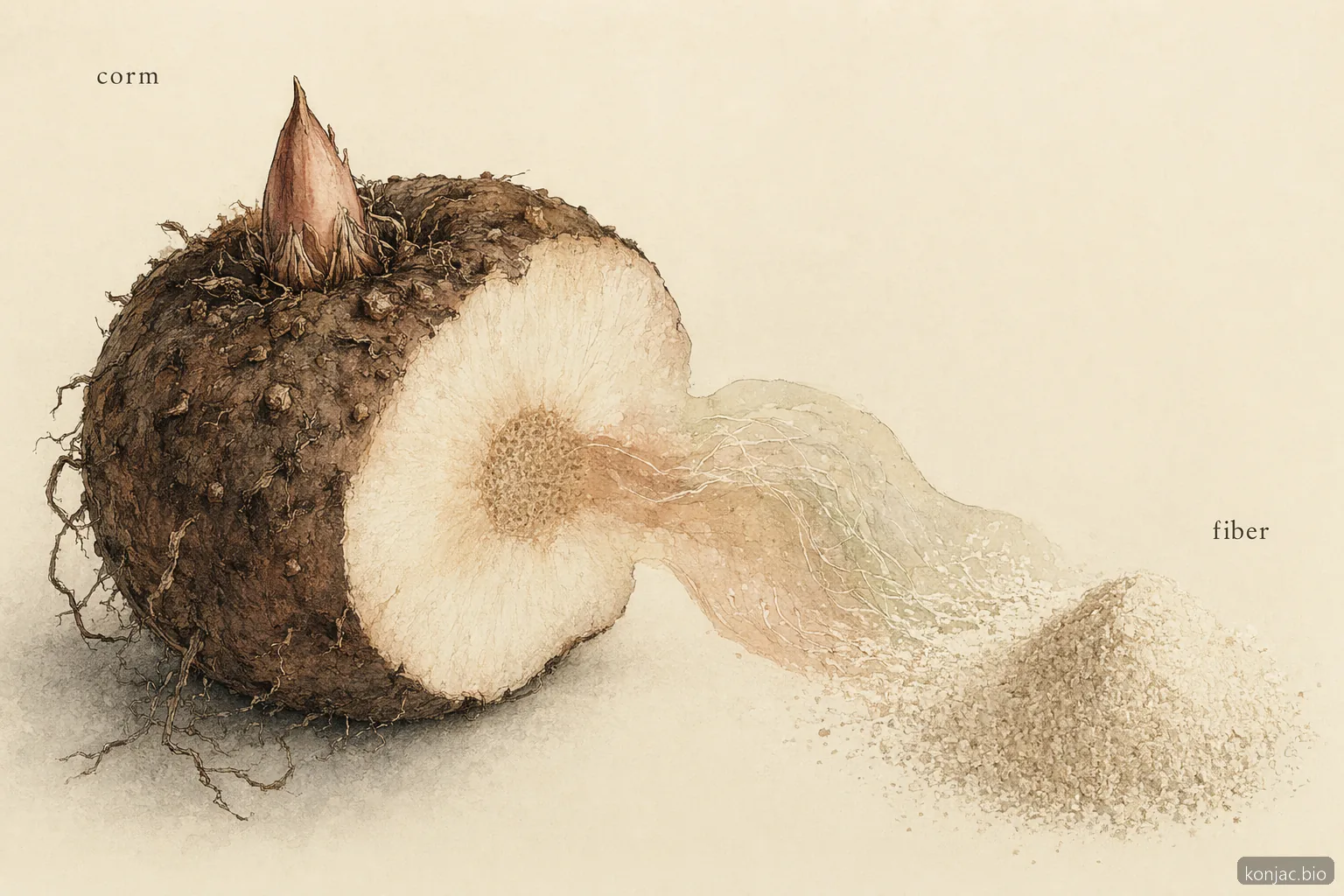
Glucomannan is a water-soluble, gel-forming dietary fiber made from the corm of Amorphophallus konjac. Chemically, it is a polysaccharide built mainly from glucose and mannose units, and konjac glucomannan is known for unusually high water absorption and viscosity compared with many plant fibers konjac review.
The simplest way to understand glucomannan is as the purified fiber fraction of konjac. Konjac flour contains glucomannan as its main functional carbohydrate, while finished ingredients may be milled, purified, standardized, or blended for capsules, powders, noodles, beverages, and thickened foods.
Glucomannan belongs in the broader glucomannan category, not in the stimulant, protein, or sugar categories. It contributes little digestible carbohydrate, but it can change the texture, viscosity, and eating experience of foods because it hydrates quickly and forms a gel-like network.
For consumers, the key point is practical: glucomannan is fiber, not a quick-fix active. Its effects depend on dose, water, timing, food context, and consistent use.
What is glucomannan made from?
Glucomannan is made from the underground corm of Amorphophallus konjac, not from a grain, seed, or synthetic polymer. The corm is cleaned, sliced, dried, milled, and separated into grades of konjac flour or purified glucomannan for food and supplement applications.
Konjac is native to parts of East and Southeast Asia and is widely associated with foods such as konjac tofu, konjac gel, and shirataki noodles. The plant is valued because its corm stores large amounts of glucomannan, a hydrocolloid that thickens water at low inclusion rates ScienceDirect.
Ingredient labels may use several related names. They are not always identical:
| Label term | What it usually means | Common use |
|---|---|---|
| Konjac flour | Milled konjac corm with glucomannan as the main fiber | Noodles, gels, thickened foods |
| Konjac gum | Food additive name for konjac hydrocolloid | Thickening and stabilizing |
| Glucomannan | Standardized soluble fiber fraction | Capsules, powders, fiber blends |
If a formula needs a specific viscosity, hydration speed, or purity level, compare konjac powder vs glucomannan before choosing an ingredient grade.
How glucomannan works in the body
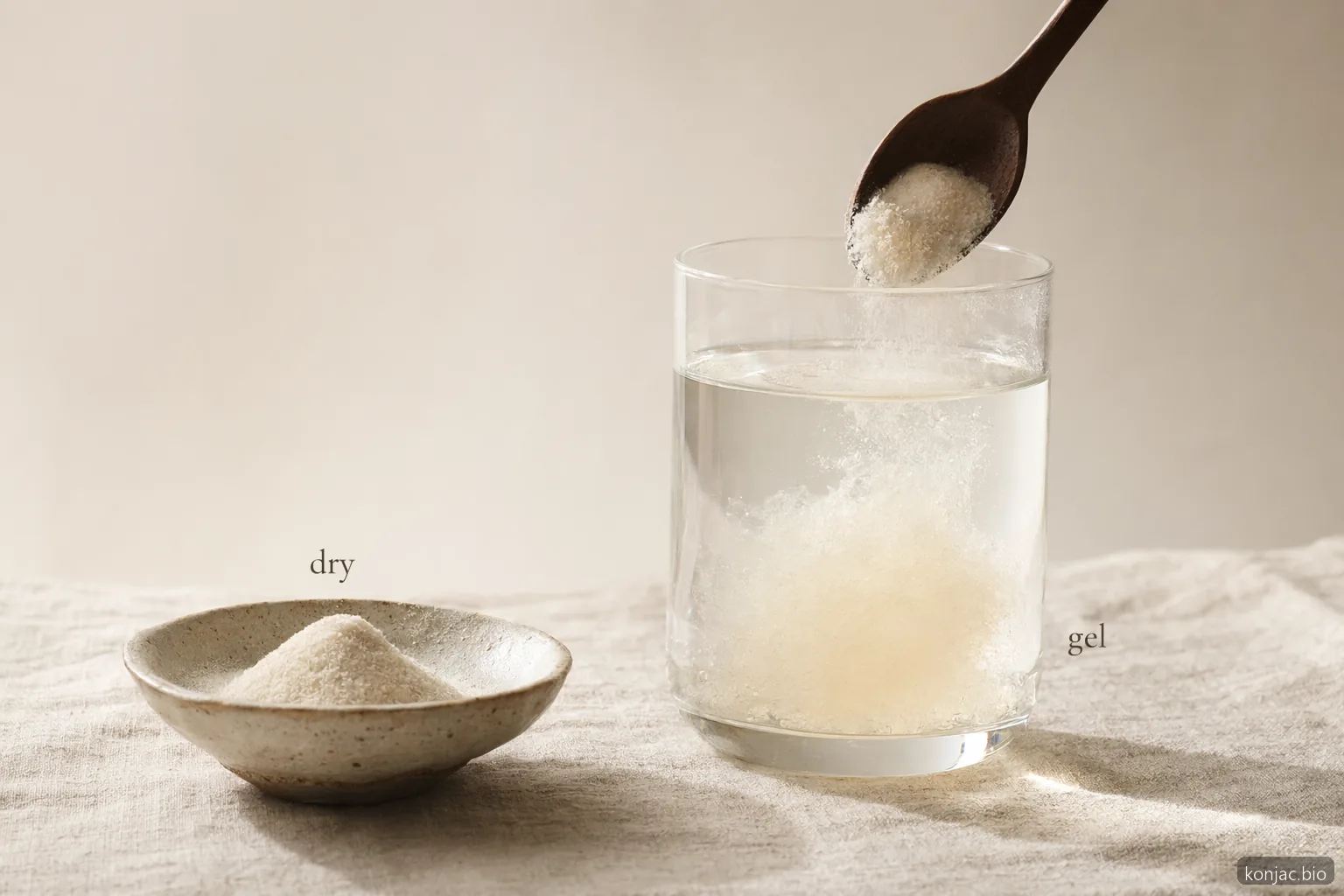
Glucomannan works mainly through hydration, viscosity, and fermentation. When mixed with enough water, it swells and forms a thick gel, which can increase the volume and viscosity of stomach contents and slow the movement of a meal through the upper digestive tract.
The gel behavior explains why timing and water matter. Capsules or powder taken dry can expand before reaching the stomach, creating a choking risk. FDA has specifically addressed konjac-containing mini-cup gel candies because their texture and shape created choking concerns, especially for children and older adults FDA jelly.
In the lower gut, glucomannan behaves like other fermentable soluble fibers. Gut microbes can ferment some of it into short-chain fatty acids, while unfermented fiber contributes bulk and changes stool water dynamics. The NIH Office of Dietary Supplements describes dietary fiber as nondigestible carbohydrates and lignin that are intrinsic and intact in plants, plus isolated or synthetic nondigestible carbohydrates with demonstrated physiological effects ODS fiber.
Glucomannan is also studied because viscosity can influence satiety, bile acid binding, and post-meal metabolic markers. These are support mechanisms, not guarantees, and they depend on total diet, dose, and individual tolerance.
What is glucomannan used for in supplements?
Glucomannan is used in supplements as a soluble fiber ingredient for satiety support, stool regularity, cholesterol claim formulations, and fiber enrichment. It is most often sold as capsules, tablets, sachets, or loose powder that must be taken with ample water.
In the European Union, the authorised wording for weight control is: “Glucomannan in the context of an energy restricted diet contributes to weight loss.” The EU condition of use is 3 g daily in three 1 g doses, each with 1 to 2 glasses of water before meals, within an energy-restricted diet authorised claim.
EFSA also issued a positive opinion for normal cholesterol support, with the wording “Glucomannan contributes to the maintenance of normal blood cholesterol concentrations,” at 4 g daily EFSA cholesterol. In the United States, structure and function language must be handled differently, so label wording depends on the market.
Common supplement formats differ in convenience and risk management:
- Capsules: easy to portion, but must be swallowed with enough water.
- Powder: flexible for drinks and recipes, but clumps if mixed poorly.
- Tablets: compact, but hydration and swallowability need careful design.
- Food blends: useful in bars, noodles, soups, and shakes when texture is acceptable.
For practical serving design, see glucomannan dosage guidance before translating trial amounts into a consumer product.
Safety, labels, and practical buying checks
Glucomannan is generally positioned as a dietary fiber, but its swelling capacity makes format and directions critical. Labels should clearly instruct users to take capsules, tablets, or powder with sufficient liquid and avoid dry swallowing. Products for children or anyone with swallowing difficulty require especially cautious format decisions.
Quality checks should focus on identity, purity, particle size, viscosity, moisture, and microbiological limits. For food manufacturers, certifications such as ISO 22000, HACCP plans, allergen controls, and batch-specific certificates of analysis help reduce supply chain ambiguity.
Use this buying checklist for finished products or raw materials:
- Botanical identity: Amorphophallus konjac listed clearly.
- Ingredient form: konjac flour, konjac gum, or purified glucomannan.
- Viscosity target: matched to capsules, beverages, gels, or noodles.
- Directions: water quantity and timing stated plainly.
- Claims: aligned with the market, dose, and regulatory pathway.
- Testing: heavy metals, microbes, moisture, and certificate of analysis available.
For formulators, konjac.bio sources konjac and glucomannan ingredients at wholesale scale with specification-led support. Contact the team through konjac.bio contact for grade matching and pricing.
Frequently asked questions
01 Is glucomannan the same as konjac?
02 What does glucomannan do when mixed with water?
03 How much glucomannan is used for EFSA weight control claims?
04 Can glucomannan be used in food, not just capsules?
05 Who should be careful with glucomannan?
06 What should buyers look for on a glucomannan specification sheet?
- Scientific Opinion on the substantiation of health claims related to konjac mannan and reduction of body weight · EFSA · 2010
- Commission Regulation (EU) No 432/2012 establishing a list of permitted health claims · European Union · 2012
- Scientific Opinion on the substantiation of health claims related to konjac mannan and maintenance of normal blood cholesterol concentrations · EFSA · 2009
- CPG Sec. 555.700 Mini-Cup Gel Candy Containing Konjac · FDA · 2023
- Dietary Fiber Fact Sheet for Health Professionals · NIH Office of Dietary Supplements · 2024