What are the most common side effects of glucomannan?
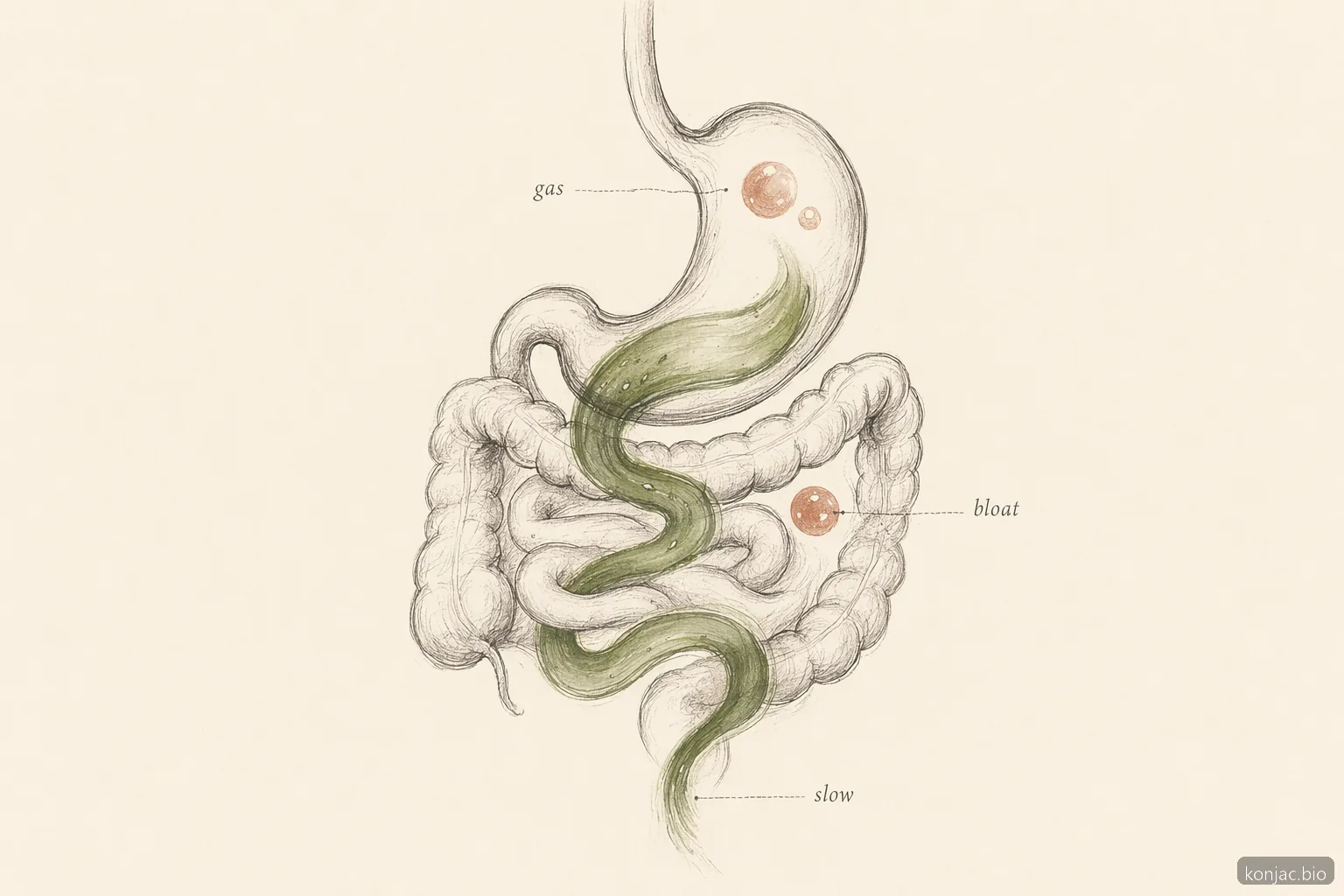
The most common side effects of glucomannan are gas, bloating, loose stools, constipation, and abdominal discomfort. These effects are consistent with a fermentable soluble fiber that absorbs water and changes stool bulk, and they are listed in the NIH Office of Dietary Supplements weight-loss fact sheet for glucomannan NIH ODS.
Glucomannan is the main soluble fiber from the corm of Amorphophallus konjac. For a broader ingredient overview, see the parent guide to glucomannan.
| Symptom | Why it can happen | Practical response |
|---|---|---|
| Gas or bloating | Gut bacteria ferment soluble fiber | Start with a smaller serving for several days |
| Loose stools | Fiber changes water movement in the gut | Reduce serving size and increase gradually |
| Constipation | Too little water with a swelling fiber | Take each serving with a full glass of water |
| Abdominal discomfort | Large single doses can feel heavy | Split intake into smaller servings |
Health-claim language should stay precise. The EFSA-approved wording is: "Glucomannan in the context of an energy restricted diet contributes to weight loss." EFSA conditions specify 3 g daily in three 1 g doses with 1 to 2 glasses of water before meals EFSA claim.

Why can glucomannan cause choking or blockage?
Glucomannan can create a choking or blockage risk when it expands before reaching the stomach. The risk is highest when dry powder, tablets, capsules, or firm gels are taken with too little liquid, because glucomannan can absorb many times its weight in water.
This risk is not theoretical. The NIH Office of Dietary Supplements notes that glucomannan tablets have been linked to esophageal obstruction, meaning the material can become lodged before it reaches the stomach NIH ODS.
The FDA has also taken action on gel candies containing konjac. Its Import Alert 33-15 covers gel candies containing konjac because of choking concern, especially with mini-cup jelly formats that can be swallowed whole FDA import.
Risk reduction is straightforward: never swallow dry glucomannan powder, do not open capsules into the mouth, and avoid taking tablets while lying down. Powder should be dispersed fully in water or another liquid and consumed before it thickens into a dense gel.
Side effects of glucomannan by form: powder, capsules, gummies, and foods
Side effects of glucomannan vary by product form because hydration, serving size, and texture change how the fiber behaves. A hydrated noodle bowl is not the same risk profile as a dry tablet swallowed with a sip of water.
| Form | Main concern | Lower-risk use |
|---|---|---|
| Powder | Clumping or thickening before swallowing | Mix completely into at least one full glass of liquid |
| Capsules | Swelling before reaching the stomach | Take with plenty of water and remain upright |
| Tablets | Higher lodging risk if large or dry | Use only as labeled and avoid if swallowing is difficult |
| Gummies or gels | Firm pieces may be swallowed whole | Avoid mini-cup gel formats flagged by FDA import controls |
| Shirataki noodles | Large portions may cause bloating | Start with a small portion and chew well |
For supplements, dose size matters as much as format. Many digestive complaints come from taking a full serving on day one rather than increasing gradually. A practical step-up plan is covered in glucomannan dosage.
Food forms can still cause discomfort if eaten in unusually large portions. Shirataki noodles and konjac rice are mostly water, but the fiber can still contribute to fullness, bloating, or stool changes in people who are not used to high-fiber meals.
Who should be more cautious with side effects of glucomannan?
People with swallowing difficulty, narrowed digestive anatomy, or complex medication schedules should be more cautious with side effects of glucomannan. The concern is not that glucomannan is inherently unsafe for every adult, but that a swelling fiber can be poorly matched to certain situations.
- Swallowing difficulty: capsules, tablets, and thick gels may be a poor fit because they can lodge before reaching the stomach.
- Previous digestive narrowing or surgery: a qualified health professional should review whether a swelling fiber is appropriate.
- Medication timing: glucomannan may reduce absorption of some oral medications, so spacing may be needed NIH ODS.
- Children and older adults: mini-cup gel candies containing konjac have been specifically flagged by FDA import controls because of choking concern FDA import.
- Pregnancy or lactation: use should be reviewed with a qualified professional because supplement needs and tolerances vary.
People comparing konjac fiber with other fibers may also want to review glucomannan vs psyllium, since psyllium and glucomannan differ in viscosity, dose conventions, and texture.
A practical safety checklist for glucomannan supplements
A good safety checklist for glucomannan focuses on water, dose, timing, and product form. These steps help reduce digestive discomfort and lower the risk of choking or blockage.
- Start small: begin below the full label serving if you are not used to soluble fiber.
- Use water generously: EFSA conditions for the authorized weight-management claim specify taking each 1 g dose with 1 to 2 glasses of water before meals EFSA claim.
- Do not take it dry: powder should be dispersed completely before swallowing.
- Stay upright: capsules and tablets should be taken while sitting or standing.
- Separate from medications: ask a qualified professional about timing if you take oral medications.
- Stop and seek help for warning signs: trouble swallowing, chest discomfort, repeated vomiting, or severe abdominal pain needs prompt professional guidance.
B2B aside: konjac.bio sources konjac ingredients at wholesale for brands, manufacturers, and product developers; request specifications and pricing through contact.
For most healthy adults, glucomannan tolerance improves when servings are gradual and well hydrated. The safest product is not always the highest-viscosity product, it is the format that matches the user, the serving size, and the amount of liquid taken with it.
Frequently asked questions
01 Are the side effects of glucomannan usually serious?
02 Can glucomannan cause choking?
03 How much water should I take with glucomannan?
04 Should glucomannan be separated from medications?
05 Are shirataki noodles safer than glucomannan capsules?
06 When should someone stop taking glucomannan?
- Scientific Opinion on the substantiation of health claims related to konjac mannan, glucomannan · European Food Safety Authority · 2010
- Dietary Supplements for Weight Loss: Fact Sheet for Health Professionals · NIH Office of Dietary Supplements · 2022
- Import Alert 33-15: Gel Candies Containing Konjac · U.S. Food and Drug Administration · 2024
- Glucomannan and obesity: a critical review · PubMed · 2008