Can you use glucomannan to lose weight?
Yes, you can use glucomannan to lose weight when it is paired with an energy-restricted diet, adequate water, and realistic expectations. The strongest regulatory wording comes from EFSA: “Glucomannan in the context of an energy restricted diet contributes to weight loss” EFSA opinion.
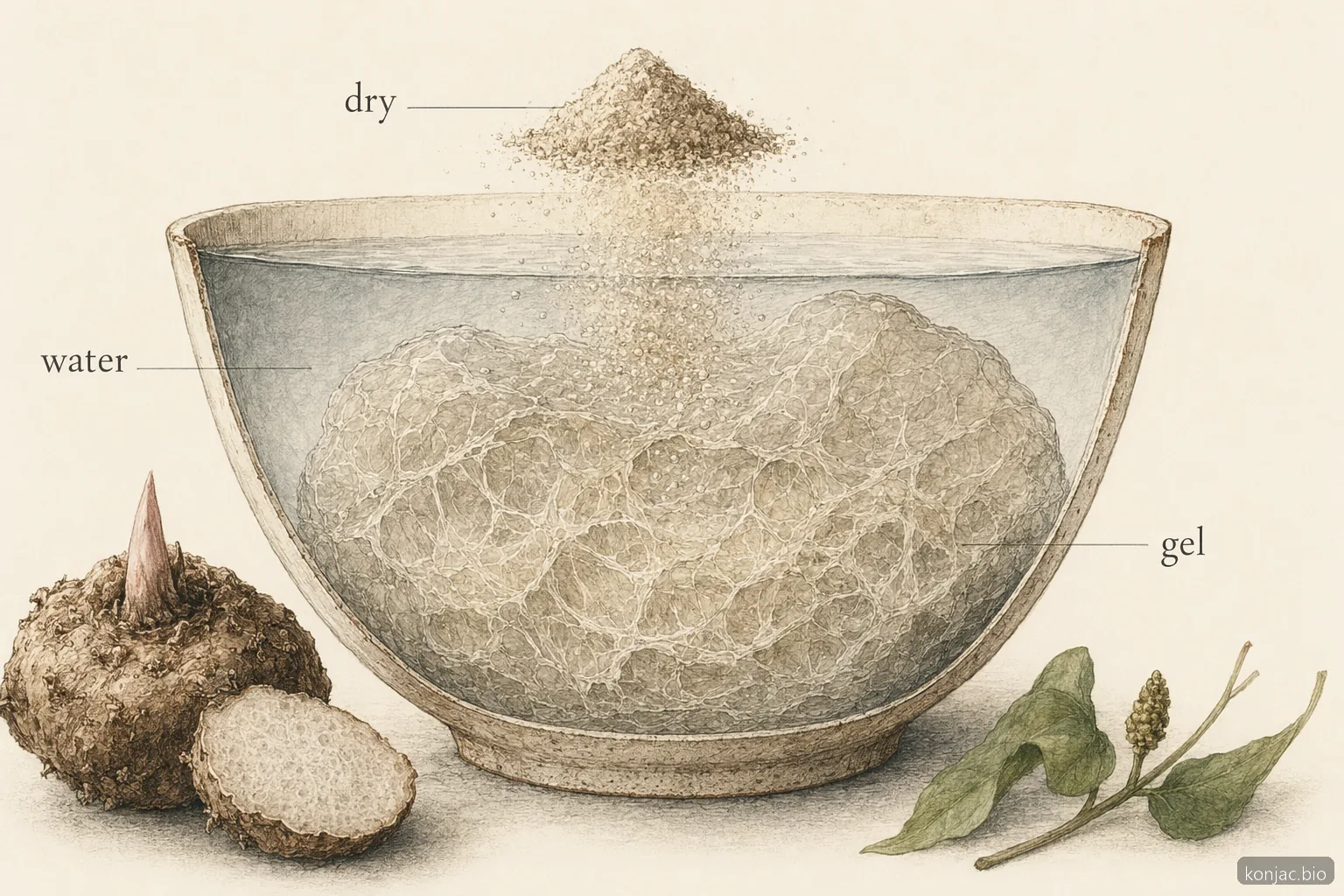
Glucomannan is a water-soluble fiber from the corm of Amorphophallus konjac. It absorbs water, forms a viscous gel, and can make meals feel more filling when taken shortly before eating. For a broader ingredient guide, see glucomannan.
The human evidence is mixed. A 2008 systematic review reported favorable effects on body weight in several short trials PubMed review, while a later randomized controlled trial found no significant weight-loss advantage over placebo in free-living adults clinical trial. That gap matters: glucomannan may support weight-management routines, but it does not replace calorie control, protein intake, sleep, or activity.

How much glucomannan to lose weight is used in studies?
The evidence-based amount for glucomannan to lose weight is 3 g per day, split into three 1 g servings before meals. EFSA’s condition of use specifies at least 3 g daily in three doses of 1 g each, taken with 1 to 2 glasses of water before meals within an energy-restricted diet EU register.
A simple dosing pattern is easier to follow than a large single serving. Most capsules contain 500 mg to 1,000 mg each, so the number of capsules depends on the label.
| Timing | Typical amount | Water | Purpose |
|---|---|---|---|
| Before breakfast | 1 g | 1 to 2 glasses | Supports fullness before the first meal |
| Before lunch | 1 g | 1 to 2 glasses | Helps routine consistency |
| Before dinner | 1 g | 1 to 2 glasses | Matches EFSA’s three-dose condition |
Start with a smaller amount for several days if fiber intake is low. Gas, bloating, softer stools, or constipation can occur when fiber rises quickly, especially when water intake is low. For a deeper dosing guide, see glucomannan dosage.
How does glucomannan fit into a weight-management routine?
Glucomannan fits best as a pre-meal fiber habit inside a calorie-controlled eating plan. It is not a metabolism shortcut; its practical value is helping some people feel more satisfied before meals.
The mechanism is physical. Glucomannan has high viscosity in water, which can slow gastric emptying and increase the volume of stomach contents. EFSA evaluated viscosity and the required daily intake when authorizing the weight-management claim EFSA opinion.
A useful routine has four parts:
- Take it before meals: 15 to 30 minutes before eating is common on supplement labels.
- Use enough water: dry fiber expands after contact with liquid.
- Keep protein steady: each meal should still include a protein source.
- Track total intake: weight change still depends on sustained energy balance.
For people using powders, mix thoroughly and drink promptly before the gel becomes too thick. For capsules, swallow one at a time with a full glass of water rather than taking multiple capsules dry.
Safety, side effects, and who should be cautious
Glucomannan’s main safety issue is expansion in the throat or esophagus when taken without enough water. EFSA’s condition of use includes a choking warning for people with swallowing difficulty or inadequate fluid intake EU register.
The U.S. FDA has also warned about choking hazards from konjac-containing mini-cup gel candies, where the gel format can lodge in the throat FDA warning. That warning is about a specific food format, not every konjac product, but it shows why hydration and product form matter.
Common digestive effects include bloating, gas, abdominal fullness, and stool changes. These effects are more likely when someone jumps from a low-fiber diet to multiple grams per day.
Use extra caution if you have swallowing problems, prior gastrointestinal narrowing, or if you take glucose-lowering or cholesterol-lowering medication. Ask a qualified clinician whether spacing is needed, since viscous fibers can affect the timing of absorption for some oral products. For more detail, see glucomannan side effects.
What should buyers look for on a glucomannan label?
Buyers should look for the actual glucomannan dose per serving, clear water instructions, konjac source identity, and quality documentation. The label should make it easy to reach 3 g per day without guessing.
For consumer supplements, the most useful label checks are:
- Serving strength: 500 mg, 750 mg, or 1,000 mg per capsule should be stated clearly.
- Daily use directions: three pre-meal servings should be easy to calculate.
- Hydration warning: the label should say to take with plenty of water.
- Ingredient identity: look for konjac root, konjac glucomannan, or Amorphophallus konjac.
- Quality systems: supplier documents may reference HACCP, GMP, or ISO 22000 food-safety management ISO 22000.
For formulators and private-label teams, viscosity, particle size, microbiology, heavy metals, and country-of-origin documents are usually more important than marketing language. konjac.bio sources konjac and glucomannan ingredients at wholesale scale for supplement, noodle, gummy, beverage, and food applications. Contact the team for specifications and wholesale pricing.
Frequently asked questions
01 How long does glucomannan take to work for weight management?
02 Should glucomannan be taken before or after meals?
03 Is powder better than capsules for glucomannan to lose weight?
04 Can glucomannan be used with a low-carb or high-protein diet?
05 Who should avoid glucomannan supplements?
- Scientific Opinion on the substantiation of health claims related to konjac mannan (glucomannan) and reduction of body weight · European Food Safety Authority · 2010
- EU Register of nutrition and health claims made on foods · European Commission · 2012
- A systematic review of the effects of glucomannan on body weight, serum glucose and cholesterol · PubMed · 2008
- Safety and efficacy of glucomannan for weight loss in overweight and moderately obese adults · PubMed · 2013
- FDA warns consumers about potential choking hazard with konjac-containing mini-cup gel candies · U.S. Food and Drug Administration · 2001