
What are glucomannan supplements?
Glucomannan supplements are capsules, tablets, or powders that deliver purified konjac glucomannan, a water soluble fiber from the corm of Amorphophallus konjac. The ingredient is valued because it forms a thick gel when hydrated, a property reviewed in the European Food Safety Authority assessment of konjac mannan, also called glucomannan EFSA opinion.
Most products list serving sizes between 500 mg and 1 g per capsule, or 1 g to 3 g per scoop for powders. The practical goal is usually to add viscous soluble fiber without adding meaningful calories, sugar, or starch.
Glucomannan supplements are part of the broader konjac ingredient family. For the full ingredient background, manufacturing context, and food uses, see the parent glucomannan guide.
- Capsules: convenient dosing, slower hydration until swallowed.
- Tablets: compact format, but must be taken with enough liquid.
- Powder: flexible for shakes, sauces, noodles, and bakery formulas.
- Blends: may combine glucomannan with psyllium, inulin, chromium, or plant extracts.
How do glucomannan supplements work in the body?
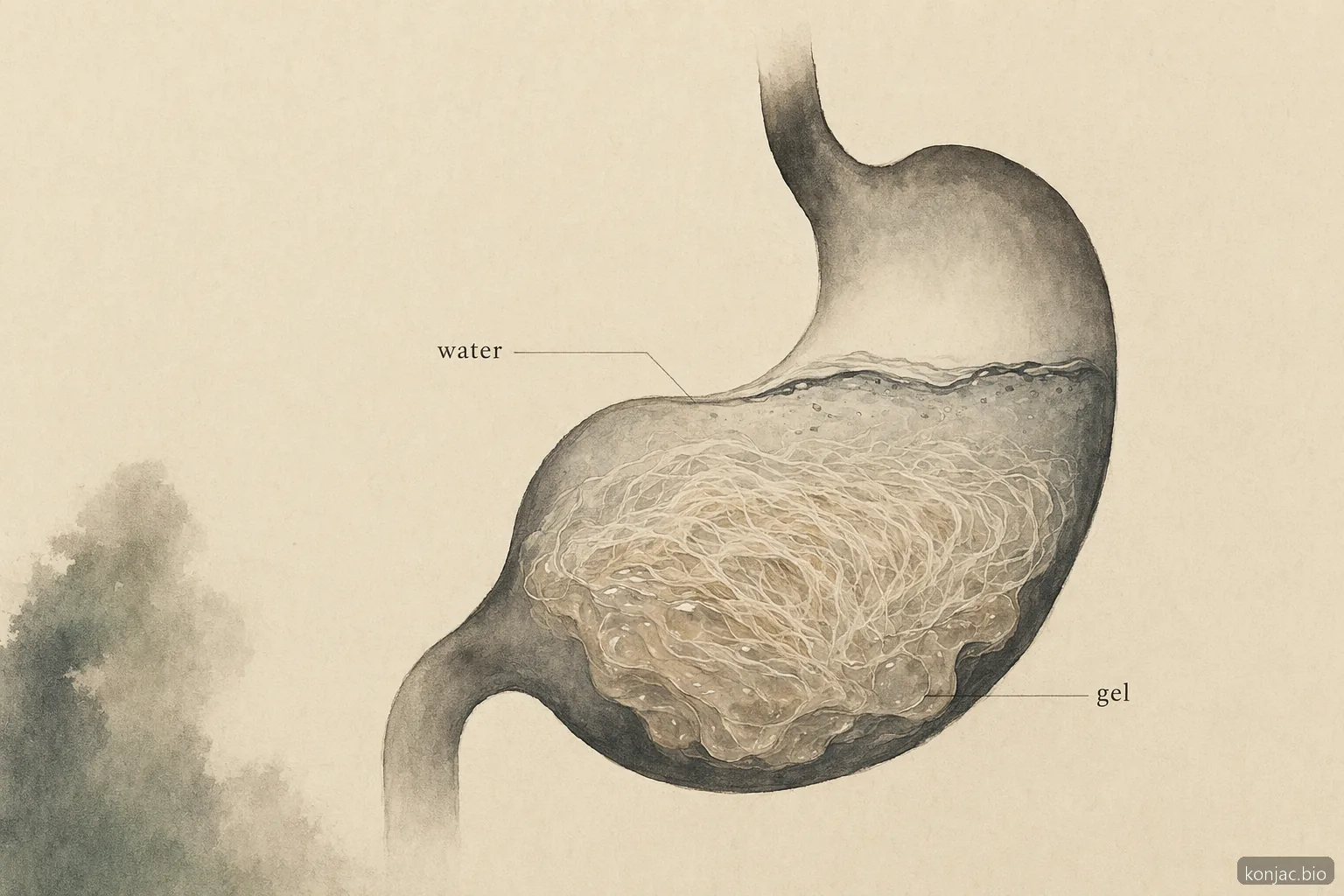
Glucomannan supplements work by absorbing water and forming a viscous gel in the digestive tract. That gel behavior helps explain why EFSA accepted the claim that “glucomannan in the context of an energy restricted diet contributes to weight loss” under specified conditions EFSA claim.
The EFSA weight management condition is specific: 3 g of glucomannan daily, taken as 1 g portions with 1 to 2 glasses of water before meals, alongside an energy restricted diet. EFSA also reviewed glucomannan for the maintenance of normal blood cholesterol concentrations at higher daily intake levels EFSA review.
Glucomannan is not a stimulant and does not supply protein, vitamins, or minerals in meaningful amounts. Its main functional feature is physical: viscosity. Hydrated glucomannan can increase meal thickness, slow gastric emptying in studied settings, and support satiety signals without adding digestible carbohydrate in the same way as starch.
| Function | What it means in practice |
|---|---|
| Water binding | Powder thickens rapidly, especially in cold liquids. |
| Viscosity | Higher viscosity usually gives stronger texture and fullness effects. |
| Fermentation | Gut microbes can ferment soluble fibers into short chain fatty acids. |
| Low calories | Useful in lower calorie foods and fiber enriched formulas. |
For cholesterol, EFSA's authorized wording is: "Glucomannan contributes to the maintenance of normal blood cholesterol levels," tied to a daily intake of 4 g of glucomannan, a higher amount than the 3 g weight-management condition. Anyone comparing a glucomannan dietary supplement for cholesterol support against one for weight management should check which condition of use the label is actually built around.
Glucomannan supplements dosage and timing
The most cited glucomannan supplements dosage for weight management is 3 g per day, split into three 1 g servings before meals with 1 to 2 glasses of water. That dosage matches the EFSA condition for the authorized weight management claim in an energy restricted diet EFSA dosage.
A lower starting amount can be easier for new users. Many labels suggest beginning with 500 mg once daily, then increasing gradually if the product is well tolerated. Common temporary effects can include bloating, gas, loose stool, or abdominal fullness because glucomannan is a fermentable soluble fiber.
- Start low: use 500 mg to 1 g once daily for several days.
- Increase slowly: move toward the label serving only if digestion feels comfortable.
- Use water: swallow capsules or powder with a full glass, not a sip.
- Separate timing: ask a qualified health professional about spacing from prescription products or supplements.
Powder needs special handling because it hydrates fast. Mix it quickly into a large volume of liquid and drink promptly, or disperse it into food formulas where water content and mixing speed are controlled. For ingredient handling details, compare glucomannan powder formats.
Are glucomannan supplements safe?
Glucomannan supplements are generally used as dietary fiber products, but dry capsules, tablets, and concentrated gels require careful hydration. The main safety concern is choking or blockage if glucomannan expands before reaching the stomach, a risk noted in dietary supplement safety discussions by the NIH Office of Dietary Supplements NIH weight.
The FDA has also warned about mini cup gel candies containing konjac because their shape and gel strength can create a choking hazard, especially for children and older adults FDA warning. That warning is about a specific candy format, not ordinary capsules or loose powder, but it shows why water, serving size, and texture matter.
People with swallowing difficulty, esophageal narrowing, or a history of gastrointestinal obstruction should avoid dry expanding fiber unless a qualified clinician says it is appropriate. Pregnant or lactating people, children, and anyone using prescription products should also seek individualized guidance before routine use.
- Do not swallow glucomannan dry.
- Do not mix powder into a tiny shot of liquid.
- Keep capsules and gelled foods away from young children.
- Stop use if chest discomfort, severe abdominal pain, or swallowing trouble occurs.
In the United States, dietary supplements, including glucomannan, are regulated by the FDA but are not pre-cleared for safety or effectiveness before they reach the market. Buyers and formulators should weigh label claims and dosing against the brand's own testing and current guidance rather than assuming pre-market review.
Capsules vs powder: practical buying checks
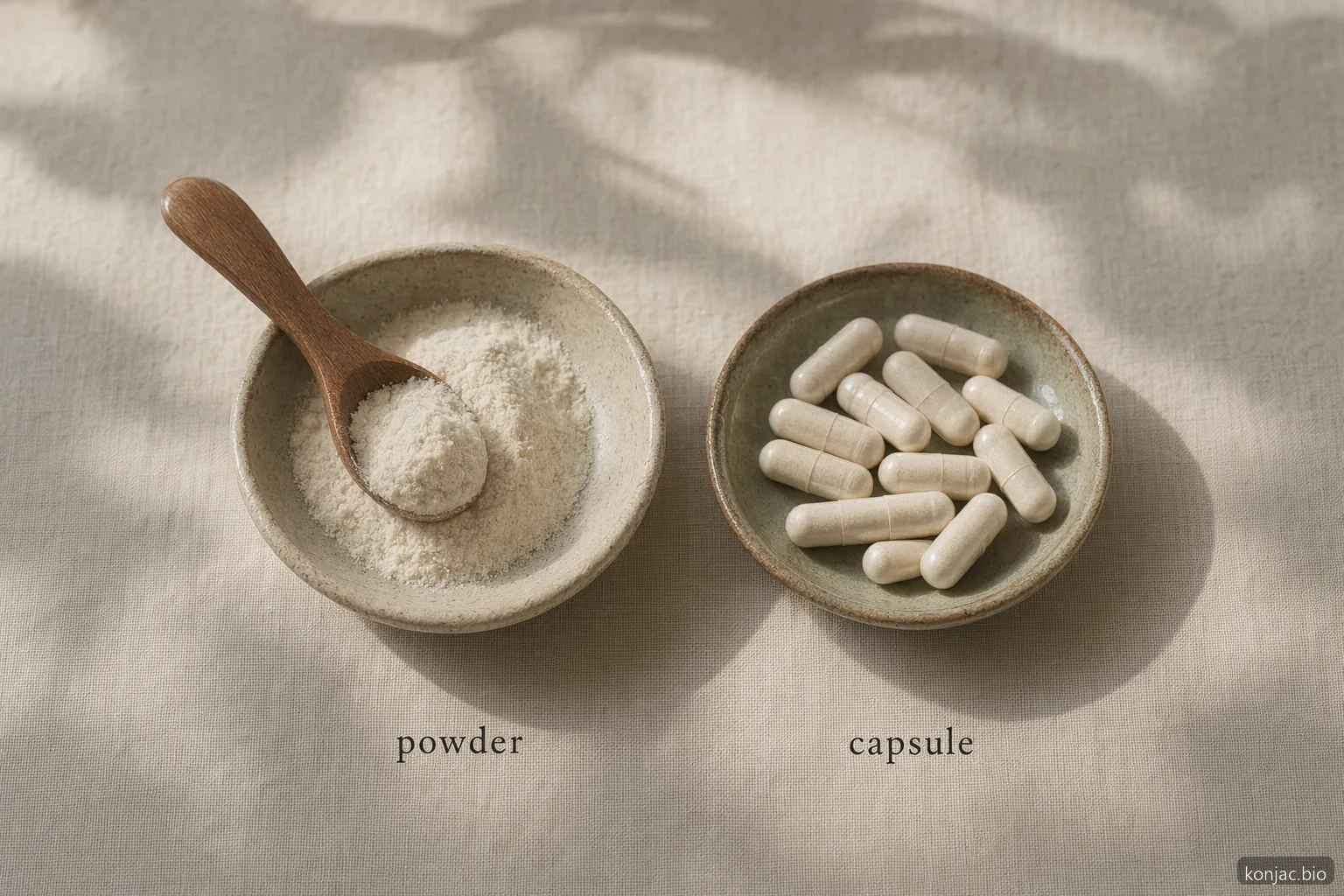
Capsules are best when precise portions and convenience matter, while powder is best when texture, formulation flexibility, and cost per gram matter. The right choice depends on whether the goal is personal supplementation, food development, beverage thickening, or bulk ingredient sourcing.
Quality varies across glucomannan supplements because viscosity, purity, particle size, and testing standards affect performance. Buyers should look for a clear botanical source, declared glucomannan content, serving size in grams, hydration instructions, allergen statements, and third party testing for heavy metals and microbial limits.
| Check | Why it matters |
|---|---|
| Glucomannan grams | Allows comparison with EFSA intake conditions. |
| Viscosity grade | Predicts thickening strength in foods and liquids. |
| Particle size | Affects mixing speed, mouthfeel, and clumping. |
| Testing | Supports quality control for contaminants and microbes. |
| Label directions | Reduces misuse with too little water. |
For finished foods, glucomannan may appear as konjac flour, konjac gum, or konjac root fiber depending on processing and labeling context. A deeper ingredient comparison is available in the konjac root fiber guide.
konjac.bio sources konjac ingredients at wholesale scale for food, supplement, and functional fiber applications. For specifications, documentation, and volume pricing, use the contact form.
Frequently asked questions
01 What are glucomannan supplements used for?
02 How much glucomannan should I take per day?
03 Are glucomannan capsules better than glucomannan powder?
04 Can glucomannan supplements cause side effects?
05 When should glucomannan supplements be taken?
06 What should I look for on a glucomannan supplement label?
07 What does the research say about glucomannan and cholesterol or blood sugar markers?
- Scientific Opinion on the substantiation of health claims related to konjac mannan (glucomannan) · European Food Safety Authority · 2010
- Dietary Supplements for Weight Loss: Fact Sheet for Health Professionals · NIH Office of Dietary Supplements · 2024
- Import Alert 33-15: Detention Without Physical Examination of Gel Candies Containing Konjac · U.S. Food and Drug Administration · 2024
- Questions and Answers on Dietary Fiber · U.S. Food and Drug Administration · 2024
- Dietary Supplements · U.S. Food and Drug Administration · 2024