What are glucomannan noodles?
Glucomannan noodles are noodles made by gelling purified konjac fiber with water and a food-grade alkaline coagulant.
The fiber comes from Amorphophallus konjac, a plant cultivated for its underground corm. EFSA describes konjac mannan, also called glucomannan, as a water-soluble polysaccharide obtained from the tuber of Amorphophallus konjac konjac mannan.
These noodles are often sold as shirataki, konjac noodles, or miracle noodles. The basic ingredient list is short: water, konjac flour or glucomannan, and calcium hydroxide or another alkaline firming agent. Some versions add oat fiber, soy fiber, tapioca starch, seaweed, or flavorings.
The eating experience is different from wheat pasta. Glucomannan noodles are slippery, springy, and neutral in flavor. They do not absorb sauce like semolina spaghetti, but they carry strong sauces well after rinsing and dry pan heating.
For the broader fiber science, dosage context, and regulatory language, see Glucomannan: The Konjac Fiber Supplement Guide.
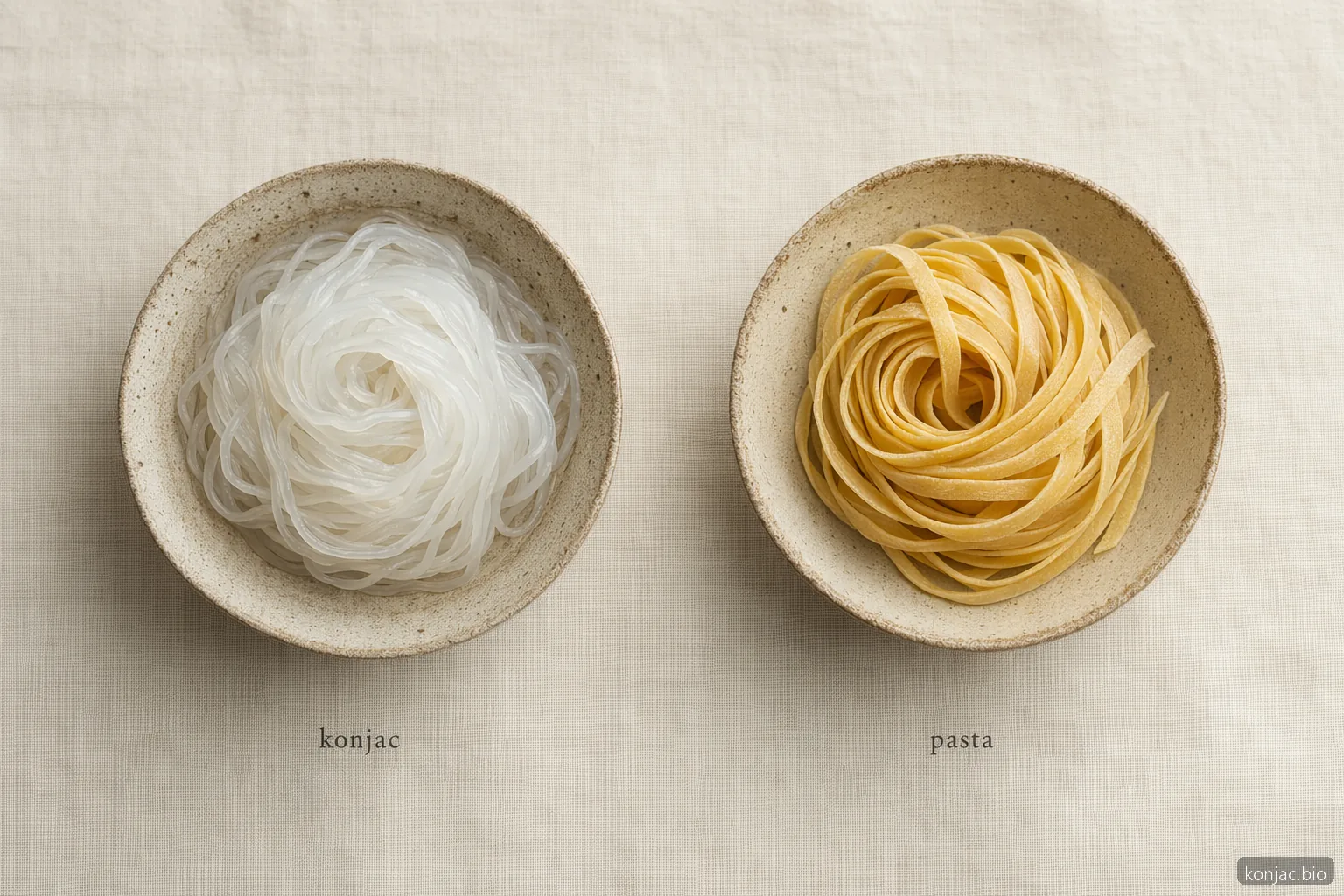
How do glucomannan noodles compare with pasta?
Glucomannan noodles are much lower in calories and digestible carbohydrates than wheat pasta, but they also provide far less protein and starch-based energy.
A 100 g serving of cooked enriched spaghetti contains about 158 calories and 30.9 g carbohydrate in USDA FoodData Central USDA data. Most plain glucomannan noodle labels list only a small calorie contribution because the product is largely water and indigestible soluble fiber, but exact values vary by brand and added ingredients.
| Food | Main structure | Typical role | What to check |
|---|---|---|---|
| Glucomannan noodles | Water plus konjac gel | Low calorie noodle base | Fiber amount, sodium, added starch |
| Wheat pasta | Durum wheat starch and gluten | Energy dense staple | Portion size, protein, enriched nutrients |
| Rice noodles | Rice starch | Gluten free starch base | Carbohydrate grams, serving size |
| Vegetable noodles | Fresh vegetable tissue | Light meal volume | Water loss, cooking time, sauce pairing |
The tradeoff is simple. Glucomannan noodles reduce the energy load of a dish, while pasta supplies more calories, carbohydrates, and texture from starch. A balanced bowl can combine glucomannan noodles with eggs, tofu, seafood, lean meat, beans, vegetables, olive oil, or sesame dressing.
People often overestimate the fiber delivered by a bowl of noodles. Many ready-to-eat packs contain water-heavy noodles, so the actual grams of glucomannan may be lower than supplement doses used in regulatory claims. Label math matters more than front-of-pack language.
How should you cook glucomannan noodles?
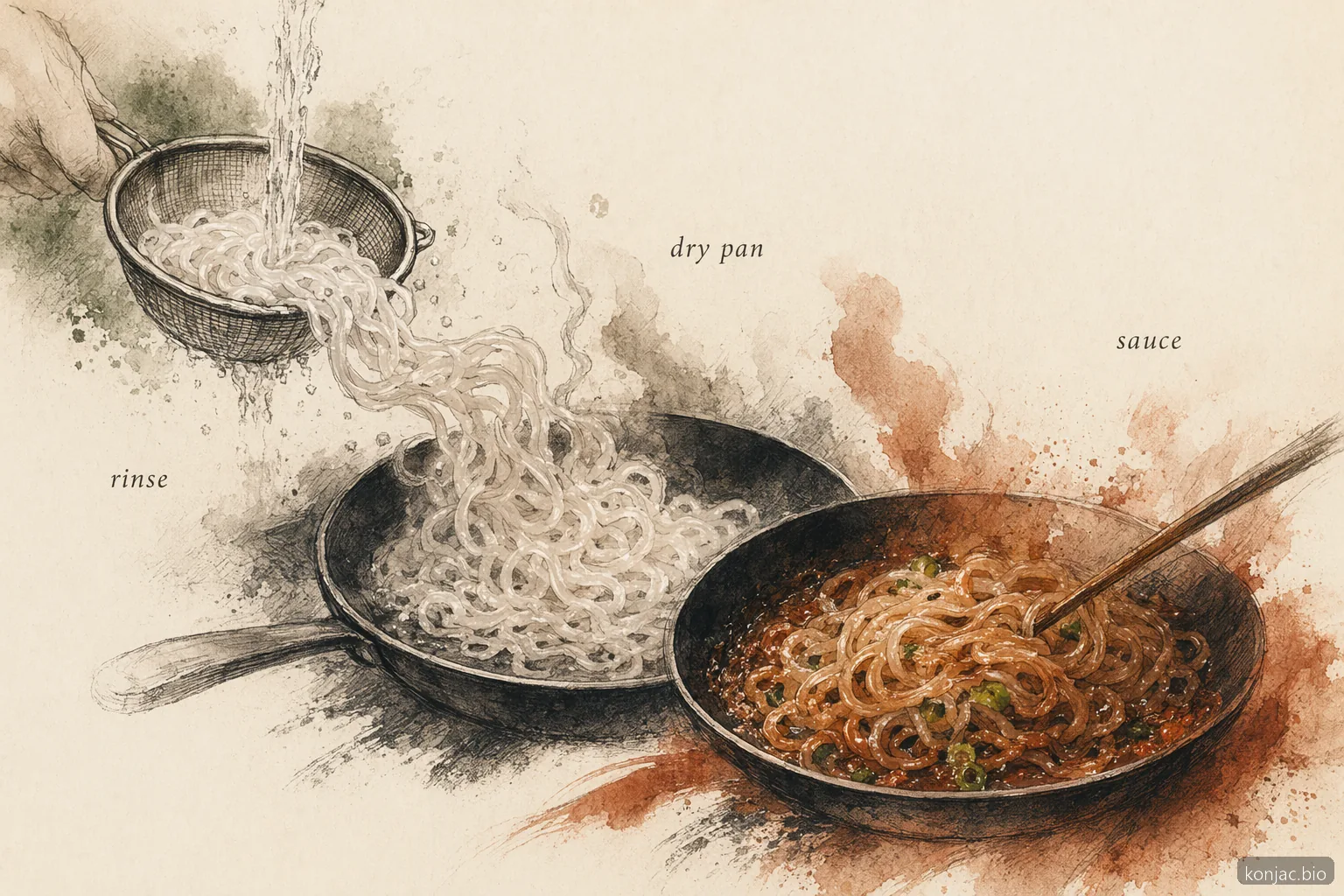
You should rinse glucomannan noodles, heat them in a dry pan, then finish them in a concentrated sauce.
The liquid in the pouch can smell earthy or alkaline. Rinsing under cold water for 30 to 60 seconds removes most of that aroma. After rinsing, draining well is more important than adding oil, because excess water dilutes sauce.
- Drain: Empty the pouch through a strainer.
- Rinse: Use cold running water for 30 to 60 seconds.
- Dry heat: Cook in a dry skillet for 2 to 4 minutes, stirring often.
- Sauce: Add a reduced sauce, broth, curry base, or stir fry glaze.
- Protein: Add tofu, egg, seafood, chicken, tempeh, or beans for meal balance.
Glucomannan noodles do not need long boiling. Extended boiling can make them rubbery without improving flavor. A short simmer in broth works for ramen-style bowls, while dry pan heating works better for pesto, peanut sauce, tomato sauce, and stir fry.
Cutting the noodles with kitchen scissors can improve the eating experience. Long konjac strands are slippery, and shorter lengths help sauce cling to vegetables and protein.
Benefits, limits, and safety considerations
Glucomannan noodles may support lower calorie meals because they add volume without the starch load of traditional pasta. The benefit depends on the whole plate, not the noodle alone. A bowl covered in cream sauce, fried toppings, or sugar-heavy glaze can still be energy dense.
For weight-management wording, the European Union authorized this claim: “Glucomannan contributes to weight loss in the context of an energy-restricted diet.” The authorized condition is 3 g of glucomannan daily in three 1 g doses with 1 to 2 glasses of water before meals EU register.
That claim is about measured glucomannan intake, not any food carrying the word konjac. A pouch of noodles may or may not provide enough glucomannan to match the authorized dose. Consumers should compare the nutrition panel with the serving size and avoid assuming that every konjac noodle meal equals a studied intake.
Safety is mostly about texture, swallowing, and product form. The FDA has warned about konjac mini-cup gel candies because their size, shape, and gel strength can create a choking hazard FDA jelly. Noodles are a different format, but they should still be chewed thoroughly and served carefully to children, older adults, or anyone with swallowing difficulty.
For sensitive digestive systems, rapid increases in soluble fiber can be associated with bloating, gas, or stool changes. Starting with a small portion and drinking water with meals is a practical way to assess tolerance.
Buying checklist for home kitchens and food brands
A good glucomannan noodle purchase starts with the ingredient list, not the front label. Plain products usually list water, konjac flour or glucomannan, and calcium hydroxide. Flavored products can add sodium, starches, oils, sweeteners, preservatives, or powdered seasonings.
- Fiber source: Look for konjac flour or glucomannan near the top of the ingredient list.
- Added starch: Tapioca, potato, rice, or corn starch can raise digestible carbohydrates.
- Serving size: Compare grams per serving across brands, not package claims alone.
- Sodium: Sauced or seasoned packs can carry much more sodium than plain noodles.
- Texture target: Angel hair suits broth, fettuccine suits creamier sauces, rice shapes suit stir fry.
- Certifications: Food brands may need HACCP, ISO 22000, kosher, halal, organic, or allergen documentation.
Food developers should also ask for viscosity, particle size, microbiology, heavy metals, pesticide screening, and country-of-origin documentation for konjac inputs. If your application uses dry glucomannan powder or konjac flour, hydration behavior and gel strength matter as much as price.
konjac.bio sources konjac ingredients at wholesale for noodle, sauce, supplement, and functional food teams. For specifications, samples, and current pricing, contact the team.
Frequently asked questions
01 Are glucomannan noodles the same as shirataki noodles?
02 Do glucomannan noodles help with weight management?
03 Why do glucomannan noodles smell strange when opened?
04 Are glucomannan noodles safe to eat?
05 Can glucomannan noodles replace all pasta in a diet?
- Scientific Opinion on the substantiation of health claims related to konjac mannan · European Food Safety Authority · 2010
- Commission Regulation (EU) No 432/2012 establishing a list of permitted health claims · EUR-Lex · 2012
- Konjac Mini-Cup Gel Candy · U.S. Food and Drug Administration · 2002
- Pasta, cooked, enriched, without added salt · USDA FoodData Central · 2019
- Glucomannan and obesity: a critical review · PubMed · 2008