How can glucomannan lose weight support work?
Glucomannan may support weight loss by absorbing water, forming a viscous gel, and helping meals feel more filling.
Glucomannan is a soluble fiber from the corm of Amorphophallus konjac, the same plant used to make konjac flour, shirataki noodles, and konjac jelly. The fiber is notable because it can bind large amounts of water and increase viscosity in the stomach and small intestine, a property described in nutrition reviews of konjac glucomannan on PubMed.
The practical effect is simple: a hydrated gel can slow the emptying of a meal and increase fullness. That can make an energy-restricted diet easier to follow for some adults. For a broader ingredient overview, see our parent guide to glucomannan.
Glucomannan is not a standalone weight-loss tool. It works best when paired with a meal plan that creates a calorie deficit, enough protein, vegetables, and daily movement. For related product and nutrition uses, compare our guide to glucomannan benefits.
What does the glucomannan lose weight evidence say?
The evidence says glucomannan may support small weight changes, but trial results are mixed and depend on dose, diet, and study design.
The strongest regulatory wording comes from the European Food Safety Authority. EFSA approved the claim: "Glucomannan in the context of an energy restricted diet contributes to weight loss" in a scientific opinion on EFSA opinion. The condition is specific: 3 grams per day, taken as three 1-gram servings with 1 to 2 glasses of water before meals.
Human trials are less uniform than the regulatory claim may suggest. A randomized study in overweight and moderately obese adults found no significant body-weight difference between glucomannan and placebo over 8 weeks, as indexed in a randomized trial. A systematic review found favorable changes in some metabolic markers and body weight, but the included studies varied in size and quality, as summarized in a meta-analysis.
| Evidence type | What it supports | What it does not prove |
|---|---|---|
| EFSA claim | 3 g daily before meals may contribute to weight loss during energy restriction | Guaranteed fat loss for every person |
| Randomized trials | Some studies show small changes, others show no significant difference | Large weight changes without diet control |
| Mechanism data | Water binding, viscosity, and fullness are plausible pathways | A direct metabolic fat-burning effect |
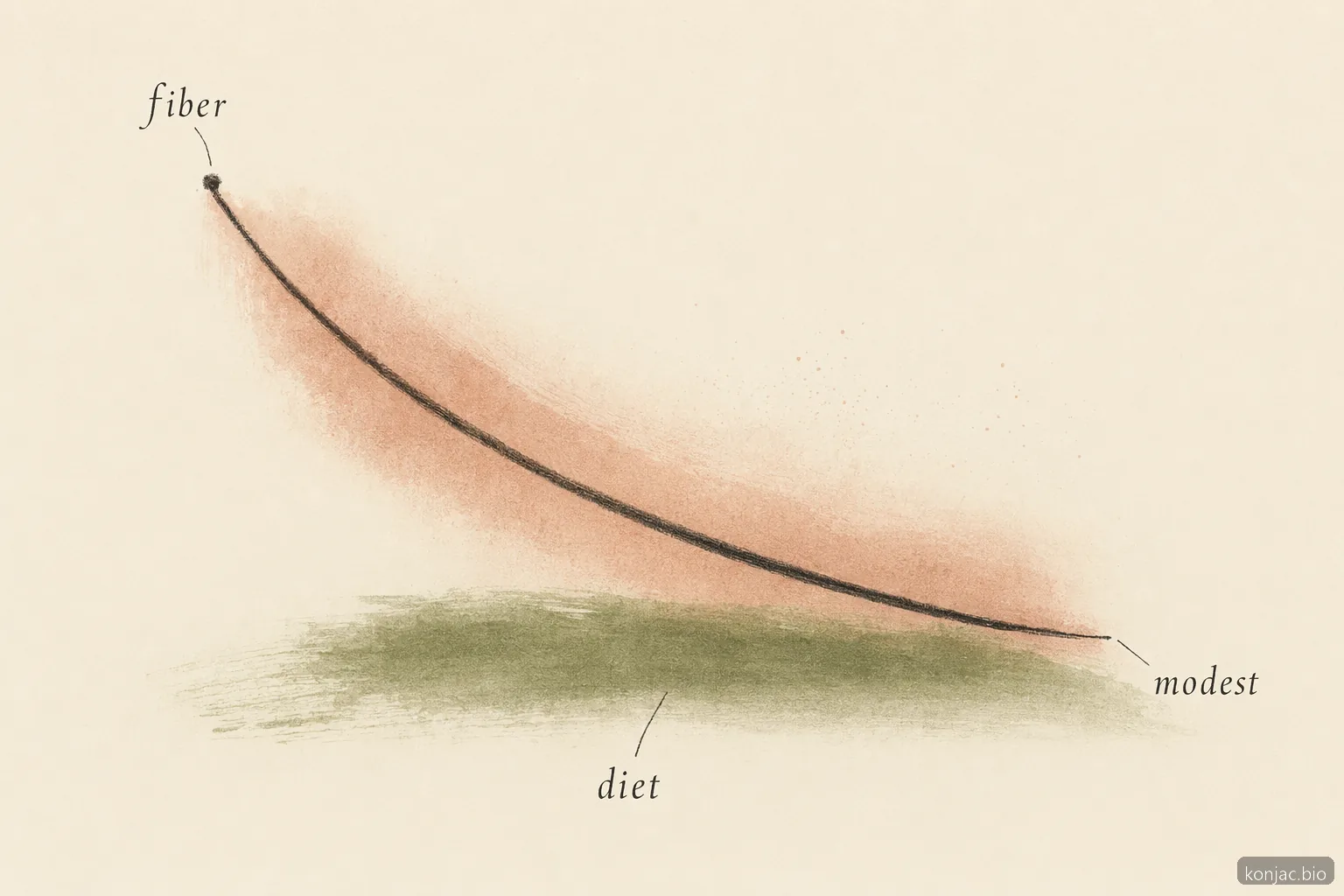
The fairest expectation is modest support. If glucomannan helps reduce snacking or meal size, the effect can matter over 8 to 12 weeks. If total calories do not change, the scale may not move.
How should glucomannan be taken for weight management?
Glucomannan should be taken before meals with enough water, using the 3-gram daily pattern behind the EFSA weight-loss claim.
A common evidence-based schedule is 1 gram before breakfast, 1 gram before lunch, and 1 gram before dinner. EFSA specifies that the beneficial effect is obtained with 3 grams daily in three 1-gram doses, each taken with 1 to 2 glasses of water before meals, within an energy-restricted diet, in the EFSA opinion.
- Start low: use 500 mg once daily for several days if you are new to viscous fiber.
- Increase slowly: move toward 1 gram before meals if tolerated.
- Hydrate well: take capsules or powder with a full glass of water, then drink additional water with the meal.
- Keep timing consistent: 15 to 30 minutes before meals is a practical routine.
- Track the driver: monitor hunger, portions, and weekly weight trend, not one-day scale changes.
Powder can be mixed into water and consumed quickly before it thickens. Capsules are easier to dose, but they still need generous water because the fiber expands after hydration.
For brands developing capsules, powders, or fiber blends, konjac.bio sources konjac ingredients at wholesale scale and can discuss specifications through contact. Buyers should define mesh size, viscosity range, microbial limits, and packaging needs before sampling.

Glucomannan vs other weight-loss fibers
Glucomannan is not the only fiber used for fullness, but it is one of the most viscous plant fibers used in supplements and konjac foods. Its defining feature is gel formation, which is why dosage, water, and timing matter more than with many lower-viscosity fibers.
| Fiber | Common source | Main texture effect | Weight-management role |
|---|---|---|---|
| Glucomannan | Konjac corm | Very thick gel | Fullness support before meals |
| Psyllium | Plantago ovata husk | Gel-forming husk fiber | Satiety and regularity support |
| Inulin | Chicory root, agave | Lightly thickening soluble fiber | Prebiotic fiber intake support |
| Oat beta-glucan | Oats, barley | Viscous soluble fiber | Heart-health claim focus in several markets |
The best choice depends on the product format. Glucomannan is useful where strong thickening is desired, such as satiety powders, drink mixes, konjac noodles, and fiber gummies with careful water-use instructions. Inulin works better where a mild sweetness and prebiotic positioning are priorities.
Texture also affects compliance. A thick glucomannan drink can become unpleasant if left to stand too long, while capsules can be more convenient. Food formats such as shirataki noodles deliver glucomannan in a hydrated matrix, but they usually contain far less concentrated fiber per serving than a supplement dose.
Safety, timing, and realistic expectations
The main safety issue with glucomannan is expansion before it reaches the stomach, especially if capsules or tablets are swallowed without enough water. The U.S. FDA has warned about choking hazards from konjac-containing mini-cup gel candies because firm gels can lodge in the throat, described in FDA choking guidance.
Supplement forms are different from mini-cup jelly, but the hydration lesson is the same. Dry glucomannan should not be swallowed casually. People with swallowing difficulty, prior esophageal narrowing, or instructions to limit fluids should avoid using it unless a qualified clinician says it is appropriate.
Digestive effects are usually related to dose and speed of increase. Bloating, gas, loose stools, and abdominal fullness are possible when fiber intake rises quickly. A slow ramp and adequate fluid intake can improve tolerance for many adults.
Realistic results are measured over weeks, not days. A useful 8-week test is to keep calories, protein, step count, and glucomannan timing consistent, then compare weekly averages. If appetite does not change, or digestive comfort is poor, another fiber or food-based strategy may be a better fit.
For more detail on tolerability and label warnings, see our focused guide to glucomannan side effects.
Frequently asked questions
01 How much glucomannan should I take to lose weight?
02 How long does glucomannan take to work for weight management?
03 Can I take glucomannan without dieting?
04 Is glucomannan powder better than capsules?
05 Who should avoid glucomannan for weight loss?
06 Does glucomannan burn fat?
- Scientific Opinion on the substantiation of health claims related to konjac mannan (glucomannan) and reduction of body weight · European Food Safety Authority · 2010
- Safety and efficacy of glucomannan for weight loss in overweight and moderately obese adults · PubMed · 2013
- Effect of glucomannan on plasma lipid and glucose concentrations, body weight, and blood pressure: systematic review and meta-analysis · PubMed · 2008
- Guidance for Industry: Candy Likely to Create a Choking Hazard · U.S. Food and Drug Administration · 2001
- Dietary Supplements for Weight Loss: Fact Sheet for Health Professionals · NIH Office of Dietary Supplements · 2024