What is a glucomannan dietary supplement?
A glucomannan dietary supplement is a concentrated soluble fiber product made from konjac, usually sold as capsules, tablets, or powder.
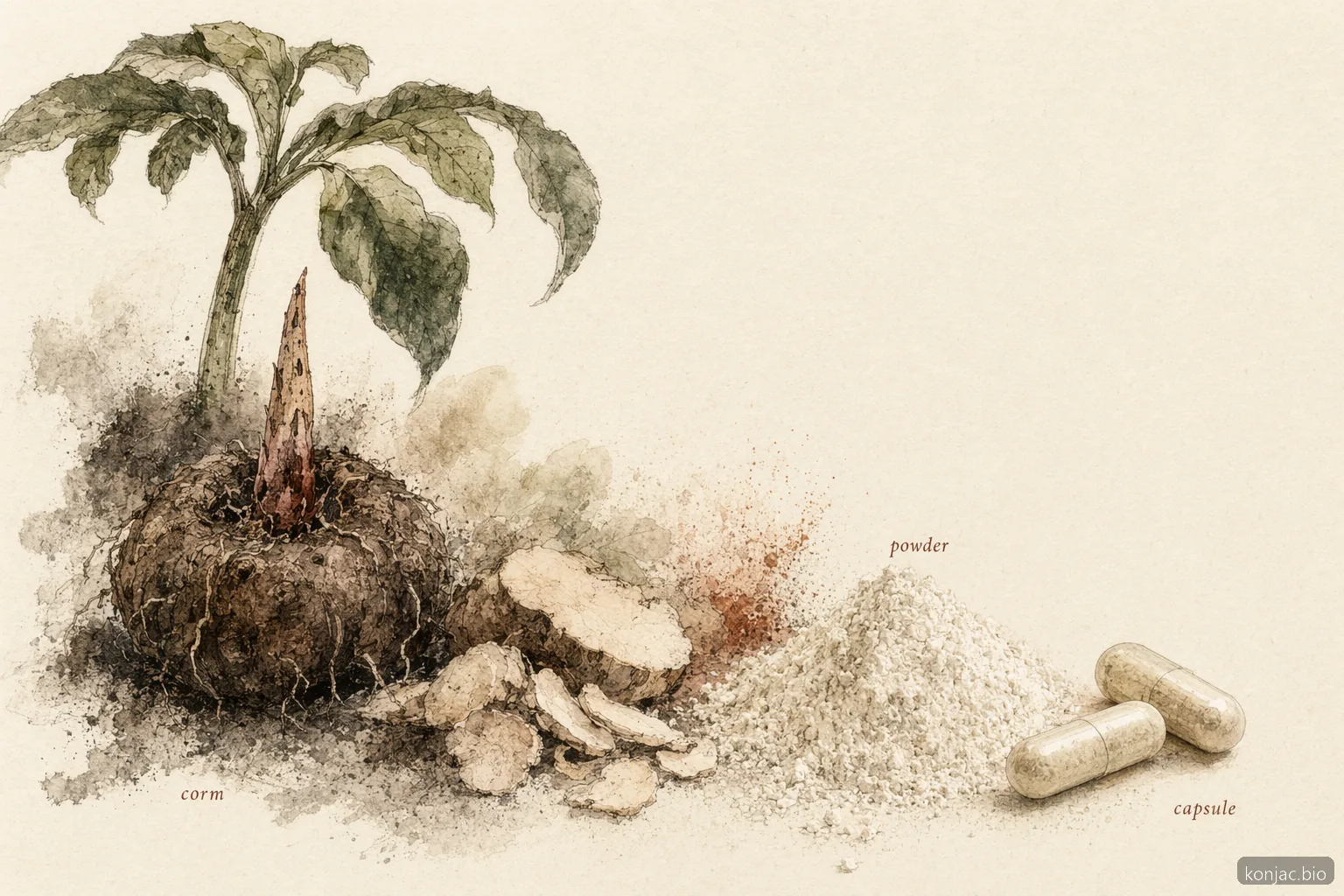
Glucomannan comes from the corm of Amorphophallus konjac, the same plant used for konjac foods, shirataki noodles, and refined konjac flour. For a broader ingredient overview, see the parent guide to glucomannan.
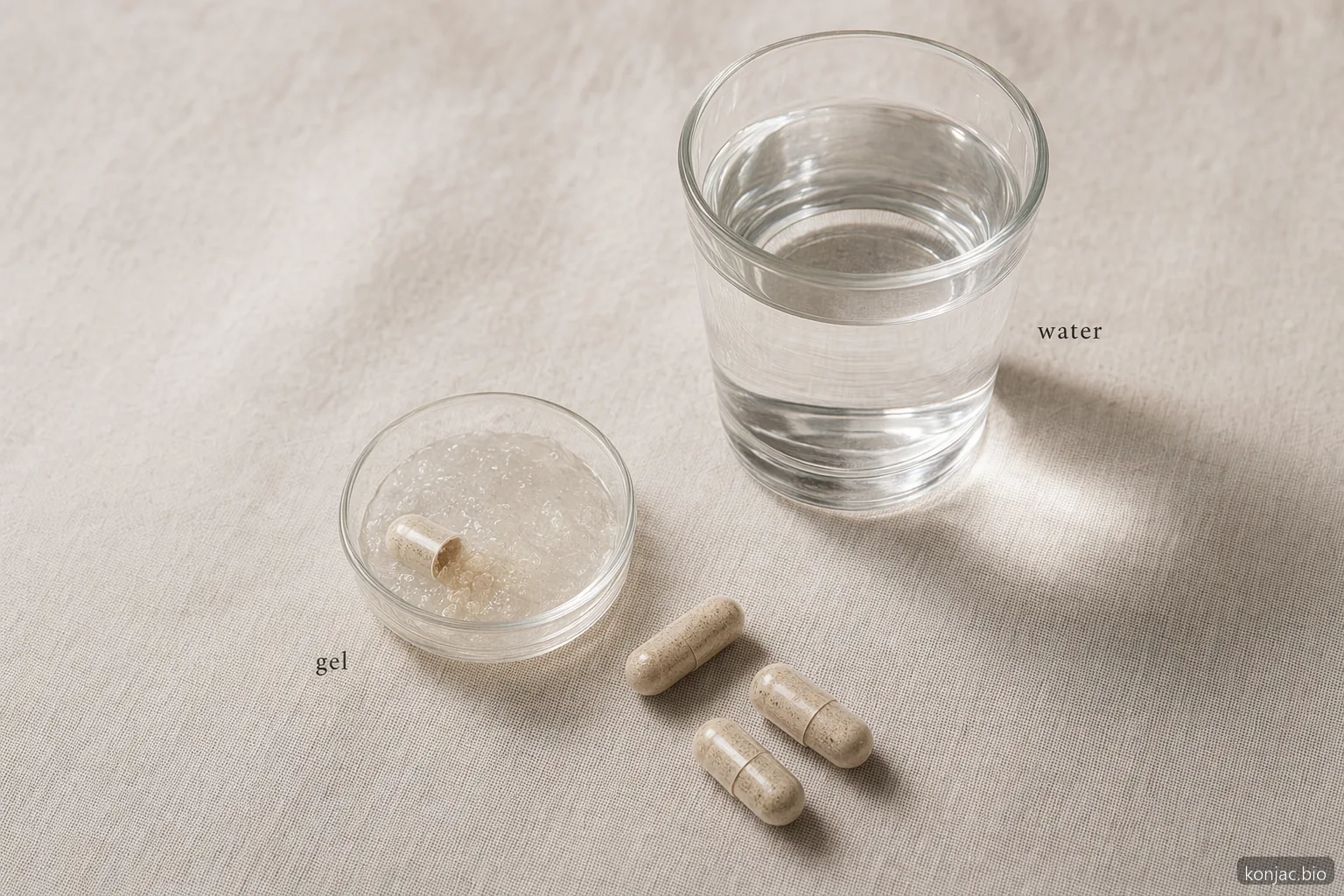
The key functional feature is viscosity. When glucomannan contacts water, it forms a thick gel that can increase the volume and thickness of stomach contents. That physical behavior is why supplement labels emphasize timing, water intake, and gradual dose increases.
| Format | Typical use | Best fit |
|---|---|---|
| Capsules | Pre-measured servings | People who want simple dosing |
| Tablets | Compressed fiber | People avoiding loose powders |
| Powder | Mixed into water or foods | Formulators and users adjusting texture |
How much glucomannan dietary supplement should you take?
Most evidence-based glucomannan dietary supplement routines use 3 g per day, split into 1 g servings before meals with plenty of water.
The EFSA-approved weight-management claim states: “Glucomannan in the context of an energy restricted diet contributes to weight loss.” EFSA links that claim to 3 g daily in three 1 g doses, each taken with 1 to 2 glasses of water before meals, within an energy restricted diet EFSA claim.
For blood cholesterol language, EFSA also authorized the claim: “Glucomannan contributes to the maintenance of normal blood cholesterol levels.” The stated condition of use is 4 g daily from glucomannan EFSA opinion.
| Goal | Common researched amount | Timing |
|---|---|---|
| Satiety support | 1 g per serving | Before a meal |
| Weight-management claim | 3 g daily | Three pre-meal servings |
| Normal cholesterol claim | 4 g daily | Split across the day |
A cautious start is 500 mg once daily for several days, then increasing only if digestion feels comfortable. Common fiber-related effects can include gas, bloating, softer stool, or fullness, especially when the dose rises quickly.
Glucomannan dietary supplement benefits: evidence and limits
Glucomannan has been studied for body weight, blood lipids, glucose markers, and satiety, but results depend on dose, diet pattern, study length, and hydration.
A 2008 systematic review and meta-analysis reported favorable changes in total cholesterol, LDL cholesterol, triglycerides, body weight, fasting blood glucose, and systolic blood pressure across controlled trials PubMed review. The authors also noted that trial quality and design varied, which matters when translating results into daily use.
A separate critical review of glucomannan and body weight found that outcomes were not fully consistent across studies, especially where diet and activity patterns differed critical review. That makes glucomannan best understood as a fiber tool, not a stand-alone shortcut.
- Satiety: Viscous fiber can make meals feel thicker and more filling.
- Weight goals: EFSA supports a specific claim only with 3 g daily in an energy restricted diet.
- Cholesterol: EFSA supports maintenance of normal blood cholesterol at 4 g daily.
- Glucose response: Glucomannan has been studied for post-meal and fasting glucose markers, but labels should avoid overclaiming.
How do you choose a glucomannan dietary supplement?
Choose a glucomannan dietary supplement by checking the konjac source, grams per serving, water directions, purity testing, and whether the form matches your routine.
The front label may say konjac root, konjac glucomannan, konjac mannan, or glucomannan. The Supplement Facts panel should make the serving size clear in grams or milligrams, not only capsules per serving.
Use this quick label checklist:
- Identity: Amorphophallus konjac, konjac glucomannan, or konjac mannan.
- Dose: ideally 1 g per serving if following EFSA weight-management conditions.
- Directions: explicit water intake, preferably before meals.
- Testing: microbial, heavy metal, and purity checks from the supplier or brand.
- Additives: minimal fillers if capsules are the goal, or food-grade powder if used in formulations.
For food, beverage, and supplement teams, konjac.bio sources konjac powder and glucomannan ingredients at wholesale volumes. Contact the team at konjac.bio for specification sheets, packaging options, and pricing.
Safety, timing, and who should be cautious
Glucomannan needs water because dry fiber expands quickly and can become difficult to swallow if taken incorrectly.
Take capsules or powder with a full glass of water, and do not dry scoop powder. People with swallowing difficulty, narrowed digestive passages, or a history of obstruction concerns should avoid unsupervised use and ask a qualified clinician first.
Konjac gel products have drawn safety scrutiny in other formats. The FDA warned consumers about certain mini-cup gel candies because their shape and gel strength created choking hazards, which shows why konjac form and hydration matter FDA warning.
In the United States, dietary supplements are regulated under FDA supplement rules and are not pre-cleared for effectiveness before sale FDA supplements. Anyone who is pregnant, nursing, using glucose-lowering prescriptions, using cholesterol-lowering prescriptions, or planning a procedure should discuss timing and suitability with a qualified professional.
Frequently asked questions
01 Is a glucomannan dietary supplement safe for daily use?
02 When should I take glucomannan before meals?
03 Are glucomannan capsules better than powder?
04 Can a glucomannan supplement help with weight management?
05 What should I look for on a glucomannan supplement label?
- Scientific Opinion on health claims related to konjac mannan glucomannan · European Food Safety Authority · 2010
- Effect of glucomannan on plasma lipid and glucose concentrations, body weight, and blood pressure · PubMed · 2008
- Glucomannan and obesity: a critical review · PubMed · 2008
- Dietary Supplements · U.S. Food and Drug Administration · 2024
- FDA warns consumers not to eat mini-cup gel candies · U.S. Food and Drug Administration · 2001