
What are the main glucomannan benefits?
The main glucomannan benefits are fullness, weight-management support, maintenance of normal cholesterol, and bowel regularity. These effects come from glucomannan's high water-binding capacity and viscosity, which make it different from many cereal fibers.
Glucomannan is a soluble dietary fiber from the corm of Amorphophallus konjac, a plant used in konjac foods and supplements. A konjac polysaccharide review describes konjac glucomannan as a high-molecular-weight fiber with strong hydration and gel-forming behavior konjac review.
| Benefit area | What it means | Evidence context |
|---|---|---|
| Fullness | Forms a viscous gel when hydrated | Used before meals with 1 to 2 glasses of water |
| Weight management | May support reduced energy intake | EFSA claim uses 3 g daily in 3 doses |
| Cholesterol | Helps maintain normal blood cholesterol | EFSA condition uses 4 g daily |
| Bowel regularity | Adds fermentable soluble fiber | Best introduced gradually |
For a wider ingredient overview, see the parent guide to glucomannan. For practical intake timing, a focused glucomannan dosage guide is more useful than a general benefits list.
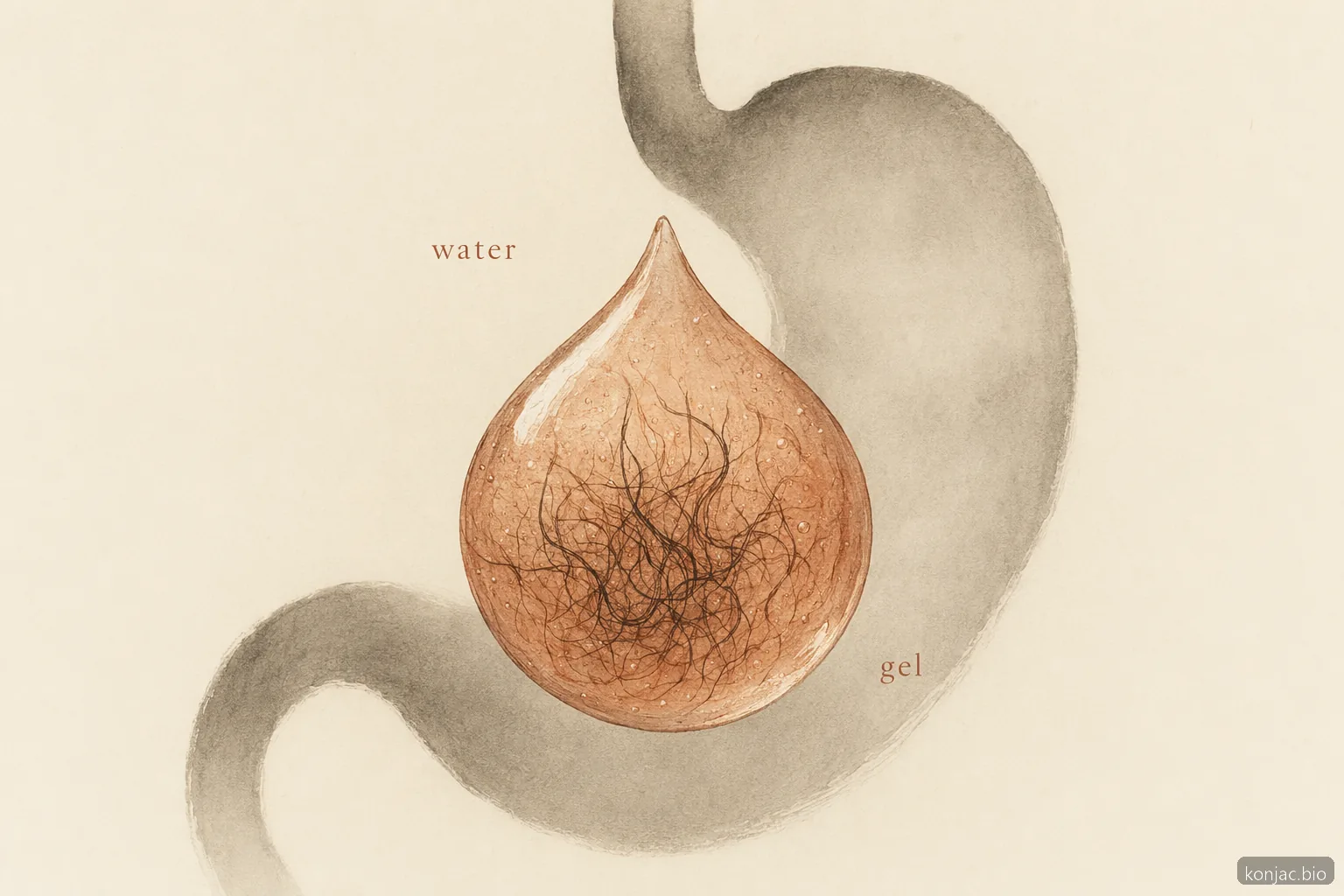
How do glucomannan benefits work in the body?
Glucomannan benefits work mainly through water absorption, viscosity, delayed stomach emptying, and fermentation by gut bacteria. The fiber does not supply meaningful calories, but it changes the physical behavior of food in the digestive tract.
When glucomannan meets water, it thickens into a gel. That gel can increase the volume and viscosity of stomach contents, which is why supplement instructions usually pair it with water before meals. The NIH weight-loss supplement fact sheet lists glucomannan as a fiber that may expand in the stomach and promote fullness NIH fact.
- Hydration: powder or capsules must meet enough water before swelling.
- Viscosity: thicker stomach contents can slow movement through the upper gut.
- Satiety signaling: greater volume may help some people feel satisfied sooner.
- Fermentation: gut microbes can ferment soluble fiber into short-chain fatty acids.
These mechanisms are ingredient-level explanations, not guarantees for every person. Food pattern, meal size, daily fiber intake, and tolerance all affect the outcome.
Glucomannan benefits for weight management: EFSA claim context
The most specific regulated weight-management wording for glucomannan comes from EFSA: "Glucomannan in the context of an energy restricted diet contributes to weight loss." EFSA set the condition of use at 3 g per day in 3 doses of 1 g each, together with 1 to 2 glasses of water before meals EFSA opinion.
This wording matters because it keeps the claim tied to a defined intake, timing, and diet context. A capsule taken inconsistently, without water, or outside a calorie-controlled pattern is not the same use case evaluated in the EFSA claim.
Clinical results are mixed but biologically plausible. A systematic review and meta-analysis in the American Journal of Clinical Nutrition reported that glucomannan had favorable effects on body weight and several cardiometabolic markers across controlled trials meta-analysis. Trial sizes, durations, and formulas varied, so individual results may differ.
For product teams, konjac.bio sources konjac and glucomannan ingredients at wholesale scale for food, supplement, and functional formulation buyers. For specifications, volumes, or samples, contact the team.

Can glucomannan help maintain normal cholesterol?
Yes, glucomannan can help maintain normal blood cholesterol when consumed at the EFSA-stated intake level. EFSA's approved wording is: "Glucomannan contributes to the maintenance of normal blood cholesterol concentrations" EFSA claim.
The condition of use for this cholesterol claim is 4 g of glucomannan per day. The likely mechanism is linked to soluble fiber viscosity, which can reduce bile acid reabsorption and influence cholesterol metabolism, a pattern also seen with other viscous soluble fibers.
A meta-analysis of randomized controlled studies found significant reductions in total cholesterol and LDL cholesterol with glucomannan intake lipid data. That finding supports the EFSA cholesterol claim, but it does not mean every person will see the same lab change.
Glucomannan is often compared with psyllium because both are viscous soluble fibers. A dedicated glucomannan vs psyllium comparison is helpful when choosing texture, dose size, and formulation behavior.
Safety, timing, and tolerance for daily glucomannan use
Glucomannan safety depends heavily on water intake, product form, and gradual dosing. Dry powder, tablets, or capsules can swell before reaching the stomach if swallowed with too little liquid, creating a choking risk.
EFSA's weight-management condition specifies taking each 1 g dose with 1 to 2 glasses of water before meals EFSA timing. The NIH also notes that glucomannan can cause gastrointestinal effects such as bloating, gas, and loose stools, especially when introduced quickly NIH safety.
- Start low: try 0.5 to 1 g once daily before increasing.
- Use water: take capsules or powder with a full glass or more.
- Separate timing: leave at least 2 hours from important oral products unless a clinician advises otherwise.
- Stop if uncomfortable: persistent swallowing trouble, pain, or severe digestive symptoms require professional advice.
Glucomannan works best as part of a high-fiber eating pattern, not as a stand-alone shortcut. Whole foods, protein, sleep, and consistent meal structure still determine most real-world outcomes.
Frequently asked questions
01 What are the best-known glucomannan benefits?
02 How much glucomannan is used for weight management?
03 Does glucomannan support cholesterol goals?
04 How long do glucomannan benefits take to notice?
05 What are common glucomannan side effects?
- Scientific Opinion on the substantiation of health claims related to konjac mannan (glucomannan) · European Food Safety Authority · 2010
- Effect of glucomannan on plasma lipid and glucose concentrations, body weight, and blood pressure · PubMed · 2008
- Dietary Supplements for Weight Loss: Fact Sheet for Health Professionals · National Institutes of Health · 2024
- Konjac Glucomannan: From Molecular Architecture to Translational Applications. A Critical Review of Structure-Function Relationships, Emerging Biomedical Frontiers, and Industrial Challenges · Foods (PubMed) · 2026